-

29 May 2024
Writer’s Note: This piece was initially written in 2021. With the recent loss of Grayson Murray to suicide and Lexi Thompson’s emotional retirement announcement related to mental well-being, I feel it’s important now more than ever to be vulnerable and share what I have been to afraid to finish & share for the past few years. If it speaks to you, share with someone you care about.

We’ve all felt it, the crisp impact of a thoroughly well-struck golf shot. We’ve all heard the crack, snap, and whir of a perfectly-sequenced golf swing. We’ve all felt the achievement & instant gratification of sinking a clutch putt. If we hadn’t, we wouldn’t yearn for it all so much. Once you experience the exhilarating transfer of energy that is the golf swing, it feels like the whole world melts away and nothing else will ever matter. How and why is golf a powerful tool for mental health and can it really be used as a substitute for therapy and to heal from trauma? Does golf have its limits with how much it can help? These are questions I have been exploring over the past 5 years, since I began my journey playing golf to heal from PTSD.
At first glance, golf does not seem like it is open to helping anyone; it is unforgiving, unfair, portrayed as an exclusionary, “men’s only” past-time. However, beneath this gilded facade of ostentation lies something with much more substance. Golf is really, at its core, a magical, powerful tool that has the potential to hone focus on the present moment and all of its wonders, i.e. nature, time with loved ones, and time away from work and responsibilities. The requisite of hyperfocus in golf provides a respite from persistent, intrusive thoughts, which can be extremely helpful for folks like myself with anxiety, OCD, PTSD, and other mental health disorders that exacerbate overthinking and self-blame/doubt. The physical release of whacking a ball can provide an outlet for aggression and anger issues. The satisfaction of accomplishing goals and succeeding on a hole/during a round is extremely rewarding. When you are striking the ball well and playing well, it’s so much easier to notice and enjoy the moment and be grateful. However, be weary not to rely on golf too much, as golf will indeed let you down.
Relying on golf as your only mental health tool is dangerous because you feel so good when everything is going your way and you are striking & putting the ball the way you intend, but what about when you don’t? What about when you can’t achieve that same satisfaction and release? Can golf provide you the same relief consistently and reliably? How will you react when it inevitably disappoints you? Clearly if top professionals who play golf 24/7, 365 still struggle with mental health concerns, golf is not the cure-all we’d like to believe it is.
I have been using golf as an escape from intrusive thoughts and traumatic memories, as well as an outlet for anger and anxiety. I cling to golf so tightly and rely on it so much for mental well-being. When you are happy, the golf course is there, when you are sad, the golf course is there. However, it is not a true escape; golf will make you confront the very same problems you are running away from and avoiding dealing with in life. For me that is poor emotional regulation, impatience, low self-esteem, negative self talk, not forgiving myself & berating myself for mistakes incessantly, & not asking for help nor accepting/trusting help. Working through all of this is difficult, yet cathartic. It’s actually the most difficult challenge I have ever confronted. I have had meltdown after meltdown and been on the verge of giving up so many times.
I was a very different golfer 3 years ago when I first started challenging myself by entering individual gross stroke play tournaments. I learned some very hard and harsh lessons during my first two tournaments. I had meltdowns, hit myself with clubs, and otherwise threatened self-harm. There have been competitors who comforted me in a time of need and I will always remember their kindness. My most recent tournament in October 2023 was a world of difference. Not only has my attitude significantly improved, I started only walking during rounds about 2 years ago and it has increased the healing power of golf tenfold. I was the only one in the entire tournament who walked. I feel so powerful releasing energy and anxiety while walking. If I hit a bad shot, I forget it moments later as soon as I start walking to the next shot and easily refocus my attention and intention. I highly recommend walking if you struggle with any anxiety issues and are able.
I have also met so many wonderful golf friends from around the world online, and many of them have been an integral support system, checking in or offering a much-needed laugh when I am struggling. I would personally like to thank Steve Pope from First Responder Golf Foundation. Steve is an amazing human and firefighter who created an organization to share the healing power of golf with fellow first responders and veterans. The next time you haven’t heard from someone in a while or are debating whether or not to check-in, take my advice and send the message. You never know when your message will arrive at a time when someone struggling needs it most. Thank you eternally to all of the people who have helped me on my journey thus far.
What attracted me to golf and inspired me to apply it as a tool to heal mental health concerns? One of my best friends, let’s call him J, is a lifelong golfer who lives with bipolar disorder. He struggles in life, but when I played golf with him and saw him interact in the golf world, I saw how much he excelled and how much it made him a better person. He is one of the people I care most about on this earth and someone who has talked me off a ledge many times. Before I took up golf, I was turning to some extremely negative and dangerous coping mechanisms. I put myself in danger and never found the relief I was looking for. J was working at a golf course at the time and when I said I wanted to try to learn golf, he gave me two men’s lefty irons from the lost and found. I had those loose irons rolling around in my backseat for a while before I bought my own used Nike slingshot set on eBay. I chose ranges I knew would be desolate until I built up my confidence and taught myself how to swing a golf club. (If you are turned off by golf due to the cost, just know that it is always free to chip and putt, just bring your own balls and putter/wedges. If more people knew that maybe it would help reduce some of the barriers.) Then COVID hit and a lot of the courses were closed. I would go practice at a closed course by my house and sometimes walk a few holes. This is how I taught myself golf on a budget and with mental health in mind.
The process and discipline of learning golf provides a healthy distraction to the negative thoughts. Working on swing mechanics is satisfying to me. Learning a new skill that hones mental & physical acuity is such a positive activity you can do for yourself. Plus the progress in golf is palpable, visceral, measurable; it’s easy to see how far you’ve come & be proud/grateful. With golf, I am finding that the mental work required to derail doubt & frustration on the course is also helping to reconnect neural pathways, which is in turn helping to rewire my entire nervous system. Golf has helped me to learn and understand that I am in control of everything, every thought, every movement at all times, we all are. Golf has taught me personal autonomy (that I have the keys to my own power & always have), how to celebrate strength, actualize concrete goals, and how to be confident in my abilities & decisions. Golf is continually teaching me how to accept interacting with people I do not necessarily want to interact with/do not particularly like interacting with. This social resilience is whetted through playing rounds and league and tournaments with strangers. Additionally, golf promotes mindfulness; it’s the only sport that compels humans to silence without distractions in admiration of an ethereal landscape.

A PTSD grounding strategy when experiencing a trigger is to name 1 thing you can see, 1 thing you can hear, 1 thing you can smell, 1 thing you can taste, and 1 thing you can touch. It is an exercise in sensory awareness, are you in the present moment or did you fall into a trap door of a trauma flashback? I dare anyone to play a round of golf and ignore the wildlife and scenery that surrounds you, it’s impossible. There is a wonderful children’s book called, Golf Through the Eyes of a Child, by Dominique DeSerres, which promotes mindfulness and appreciation of nature & the present moment through golf. I imagine a world where one day, golf is more accessible and is promoted in schools, jails, and medical facilities, in the same manner as yoga is, for mindfulness, meditation, and physical activity.
Golf is not a foolproof cure-all. Golf is not a substitute for therapy; it is only as effective as the work you are doing off the course, much like yoga (continue your practice off the mat). Your progress in golf can be derailed at any moment for any number of reasons and I have learned that it is unwise to rely too heavily solely on golf as a crutch, otherwise you risk it becoming no more than a bandaid. Golf is an emotional roller coaster; the happiness from golf is fleeting, lasting only until I satiate the craving for my next fix. When I am not playing well, it feels like the end of the world. The first setback and hiccup I experienced as a golfer was after a long winter hiatus prompted not only by the weather, but also pelvic & sciatic pain. I came back to the course to discover I had completely forgotten how to swing a golf club & lost my swing entirely. It felt like I had forgotten how to ride a bicycle. I felt frustrated with myself and my body for not being as effective as it once was. A wave of shame and consternation washed over me as my first round back was rife with shanks, hooks, tops, chunks, and whiffs. I was back to the beginning, kind of like in the movie LABYRINTH (1986), where Sarah (Jennifer Connelly) gets sent back to the beginning of the maze. “It’s not fair!”, she whines, just as I did on the course.
Much akin to the PTSD healing process, the journey of learning and mastering golf is not linear whatsoever; you will take 1 step forward and 5 steps back. And unfortunately for myself (and Sarah in the movie), I had to learn that yes, golf and life are indeed unfair, but it is how you cope with this adversity that will determine your relative success or failure. A motto I like to use is, “Bad shot, not a bad round. Bad round, not a bad day. Bad day, not a bad life.” Never let the struggles of today affect your desire to persevere tomorrow. Don’t let a bad shot ruin your round, and concurrently, don’t let a bad round ruin your day, and ultimately, don’t let a bad day ruin your life. It is much easier said than done. As someone who has survived an attempt at taking my own life in 2016 and still struggling daily with thoughts of self-harm, I know as well as anyone feeling better is not as easy as saying a cute phrase. Gratitude in the present moment is powerful, but it is possible to struggle so much you are unable to be grateful. In golf and in life there will be moments that question if we truly have the strength to persist. All it takes is one good shot to inspire hope for the future of your game; all it takes is one good thought or feeling or experience to inspire hope for the future of your life.
Working through all of this is difficult, yet cathartic. My outlook on & general perspective of life has undergone a paradigm shift through learning golf. It’s easy to focus only on the negative or automatically expect bad things to happen, especially if you have experienced trauma. Golf has helped me to change my perspective; now when I look out onto a hole, I try to think about where I want the ball to go instead of hyper fixating on the hazards & where I don’t want it to go. This in turn has helped me pause to redirect my negative thinking off the course. I am grateful for the people and places who offered a beacon of hope in a dark time. I try to be that for other people and animals as much as I can. I am grateful for what the game of golf has taught me about myself. I try to help other people discover what I have learned so they can benefit from it, too. Each tee time is motivation to keep going another day. Each lesson you learn about yourself and challenge you overcome in golf is inspiration to pursue these same goals off the course. While golf may not be the end-all, be-all answer to all of your problems, it certainly does help, so I will enjoy the walk while I still can.
-
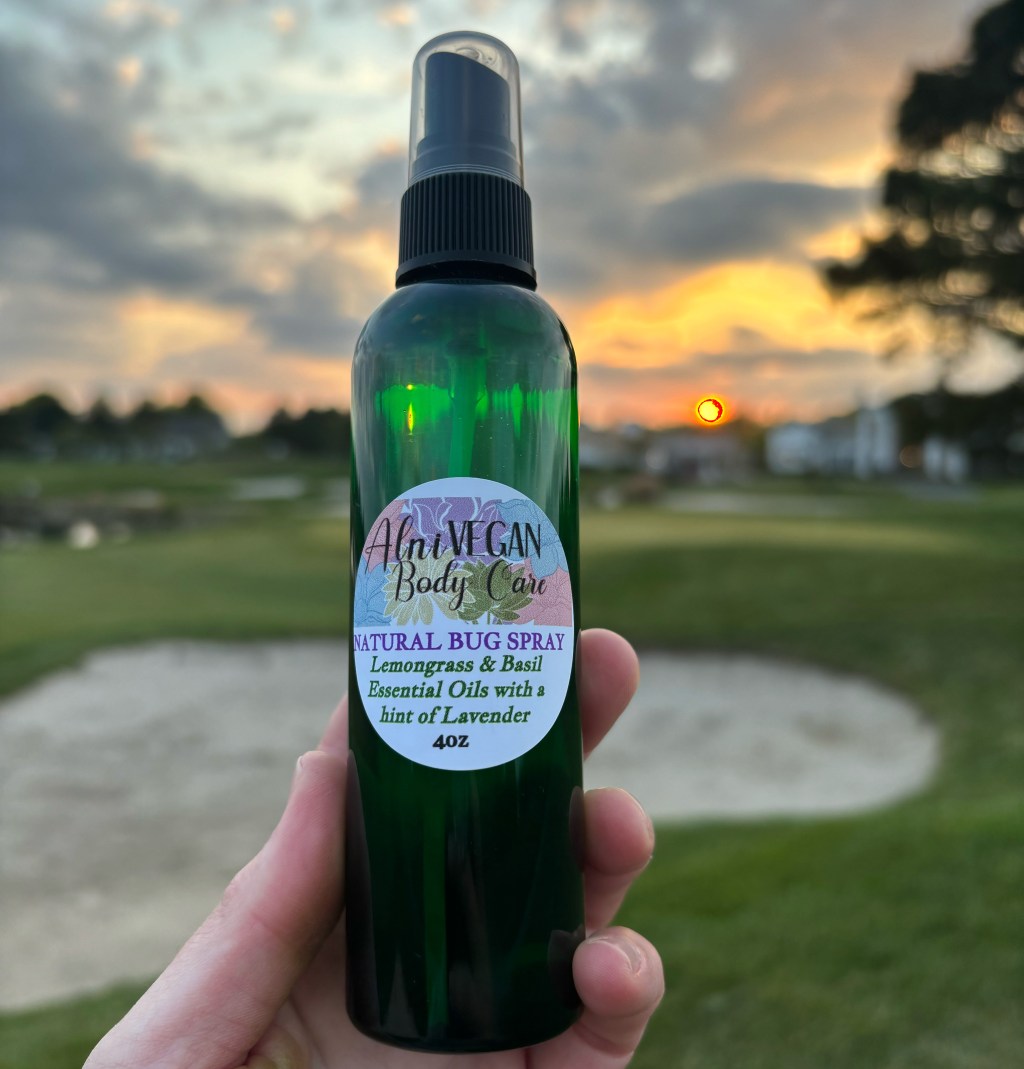
Don’t hit the golf course without this best-selling natural bug spray made with lemongrass and basil essential oils.

Looking for a natural and effective bug spray for golf that actually smells good? Look no further than Alni Body Care lemongrass and basil natural bug spray. Made by a golfer, for golfers. Made by a golfer who has spent a lifetime getting eaten alive by bugs and scratching bug bites to the point of leaving scars. Bug repellants with DEET are toxic and not even effective. Other natural bug repellants do not smell good and aren’t enough of a barrier against itchy, biting bugs. Alni Body Care lemongrass and basil natural bug spray has been tried, tested, and proven on coastal golf courses, adjacent to many bodies of water and thus, many bugs! Ward off all itchy, biting bugs commonly found on golf courses and by water with Alni Body Care best natural bug spray for golf, made with lemongrass and basil essential oils. Proven effective against mosquitoes, horse flies, & no-see-ums.

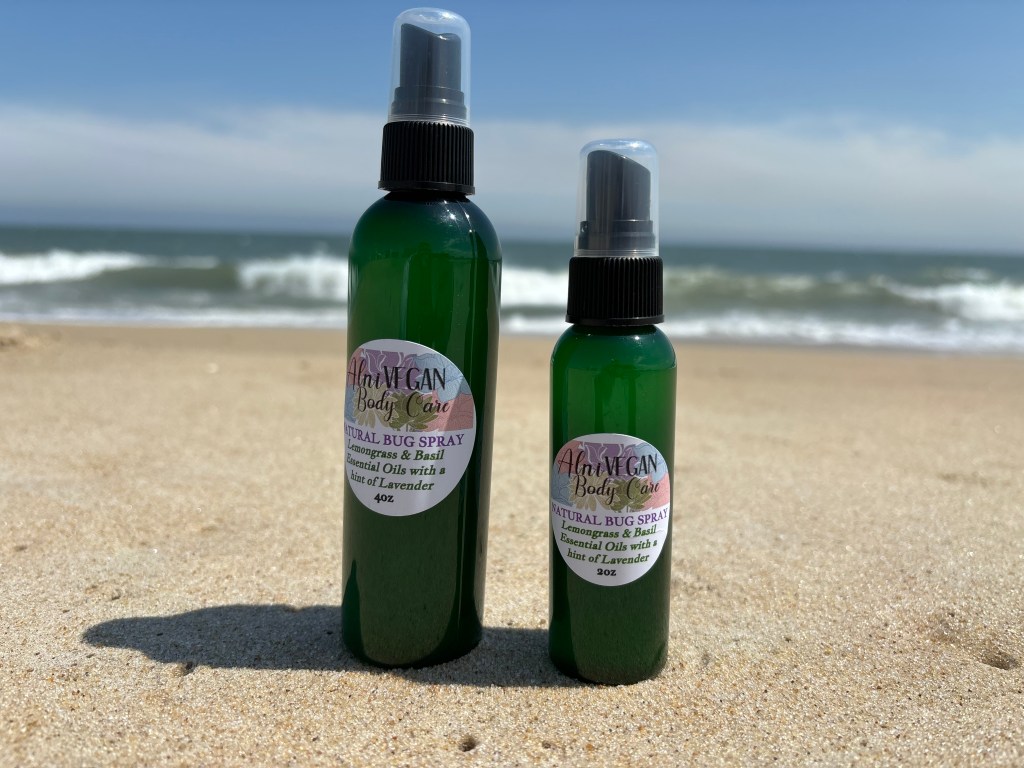
The BEST Natural Bug Spray for golf! The BEST Natural Bug Spray for the beach! The BEST Natural Bug Spray for camping, hiking, travel, all outdoor activities! Alni Body Care Natural Bug Spray – Lemongrass & Basil essential oils with a hint of Lavender essential oil. Made with a durable recycled P.E.T. plastic cosmos pray bottle. Perfect for the golf course, beach, campsite, theme parks, airplane, and anywhere else that glass is prohibited; easily toss into a beach or golf bag with no risk of breaking or leaking.
Available in two sizes: 2oz or 4oz Spray Bottles.
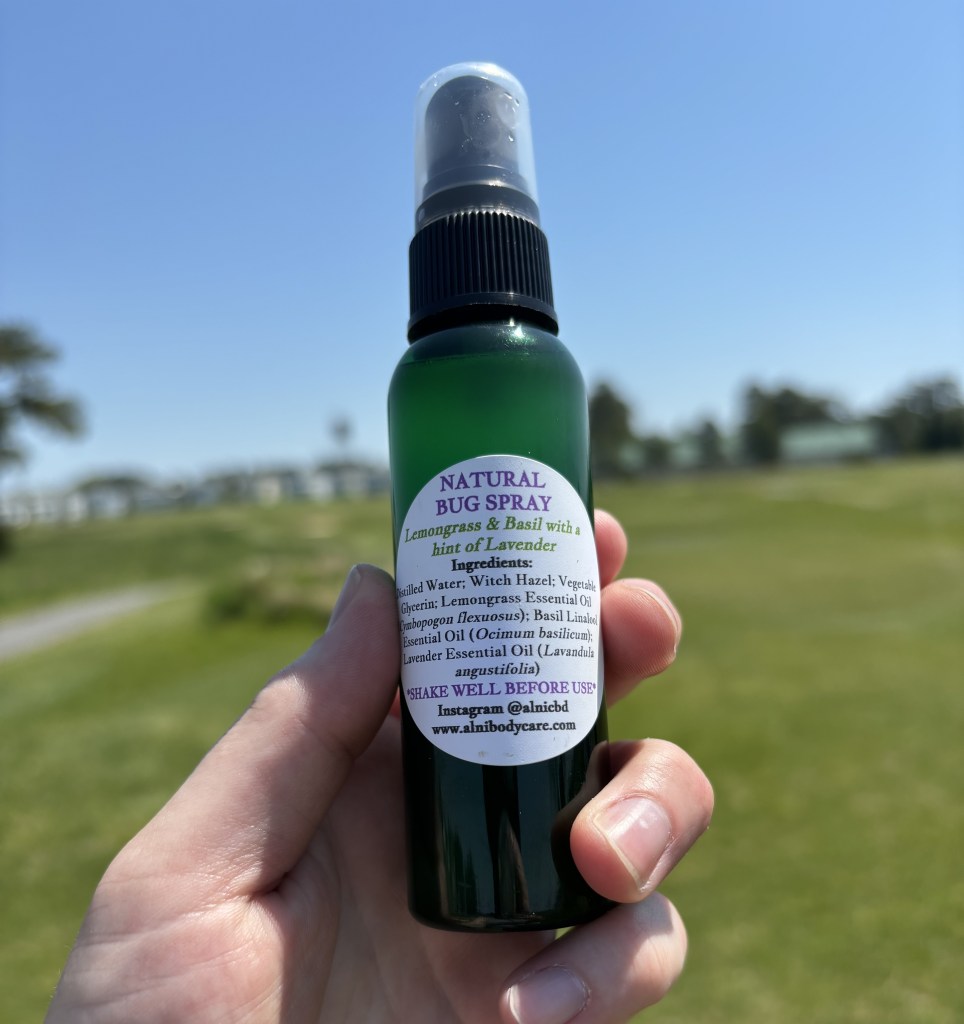
INGREDIENTS: Witch Hazel; Distilled Water; Vegetable Glycerin; Lemongrass Essential Oil; Basil Linalool Essential Oil; Lavender essential oil.
*TURF SAFE!* NO DEET! NO ALCOHOL! Made with organic essential oils, distilled water, & witch hazel! Safe to use on the golf course, but please be respectful and apply while standing on the golf cart path.

-
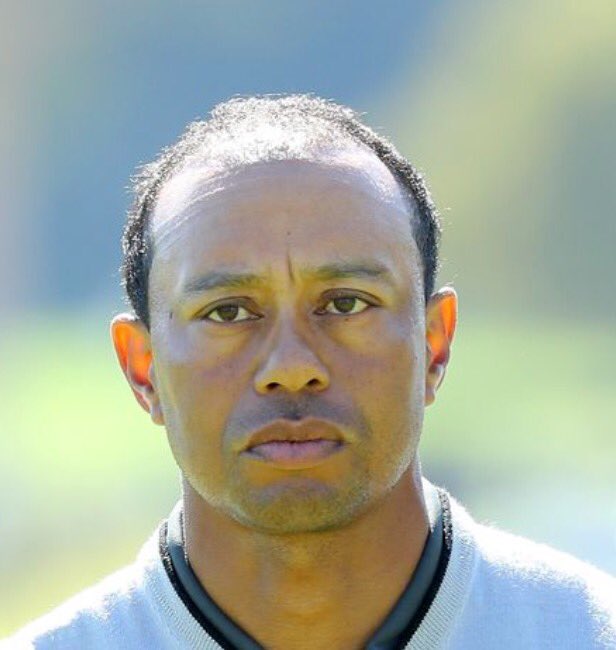
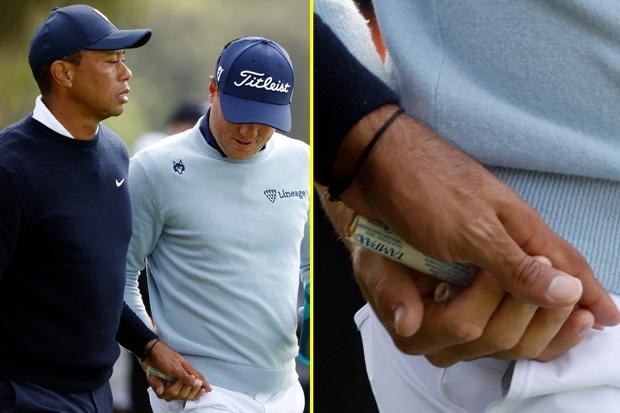
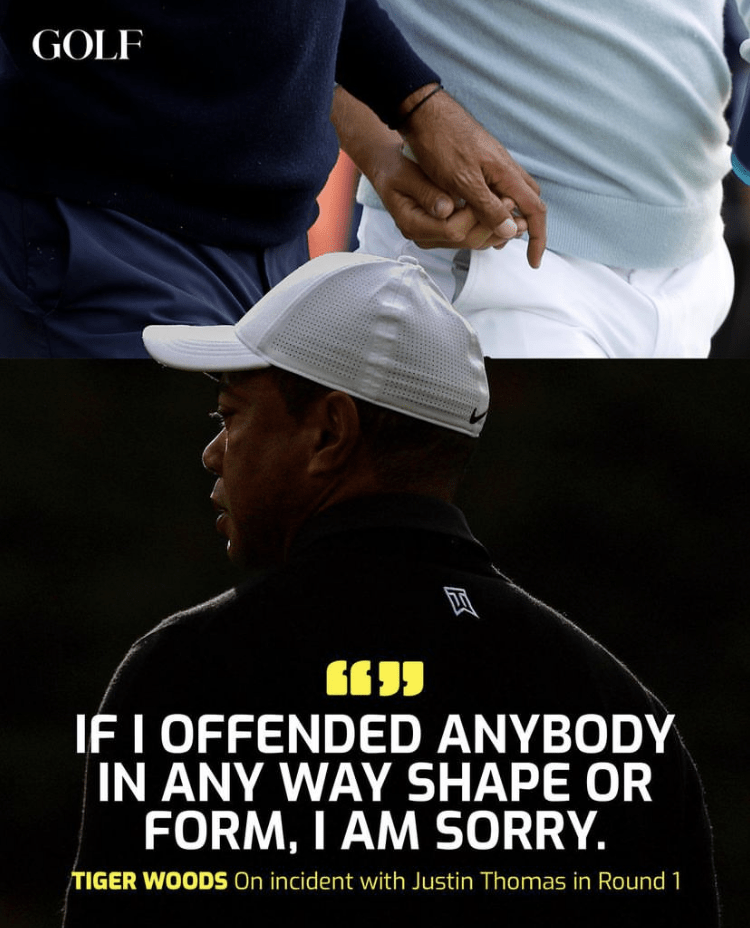
Sexism is alive and well in golf, as reaffirmed by Tiger’s tampon stunt at The Genesis Invitational this weekend. Right now, we should be lauding Tiger’s opening round 2-under 69 and miraculous journey of recovery since his car accident during this very event exactly two years ago. We should be eagerly anticipating another win by Max Homa. But instead we are reminded once again how Tiger and the average male golfer truly feel about women and how women and our bodies are used as euphemisms for weakness.
I suppose Tiger Woods missed the memo that it’s no longer cool or acceptable to make fun of women for a normal biological function anymore. He’s 47 years old, on national TV, and has an adolescent daughter who gets a period, how could he think that was OK? And what types of «jokes» does he make when there are no cameras? Was it shocking that a crusty degenerate such as himself, with all of his ailments and surgeries, could outdrive a much younger, healthier, Justin Thomas? Definitely suspicious, but did it warrant a cheap sexist jab directed at JT? Not at all.
Why is it an insult to call someone a woman? That’s as if to say it is insulting and shameful to be a woman. Why is it an insult to get a period? A period is not a sign of weakness, it’s a sign of strength. And it’s not posh or cool to make fun of women for getting a period nor use it as an insult. As a matter of fact, let’s stop using women and their body parts as euphemisms for weakness. Let’s stop using the word pussy to mean weak; a pussy is infinitely stronger than any dick could ever dream to be. Menstruation actually makes women stronger than men; we can do anything and we can do it in pain, nauseous, with debilitating cramps, and while actively bleeding.
Tiger would never be able to accomplish anything he has if he were a woman, no man would, because they would be doubled over in pain and complaining about their periods, instead of just getting up and getting on with the day like every woman has since the dawn of time. Women get through life in unbearable pain every single damn day and we are stronger and more resilient than any man will ever be including and especially Eldrick Tiger Woods. Our bodies, uteruses, and pussies have proven to be infinitely stronger than any man’s hairline, erection, or ego for that matter. Have you ever seen how a man reacts when you point out his baldness or erectile dysfunction? They are far more insecure about their lack of hair and lack of boners than any woman ever was about her period.
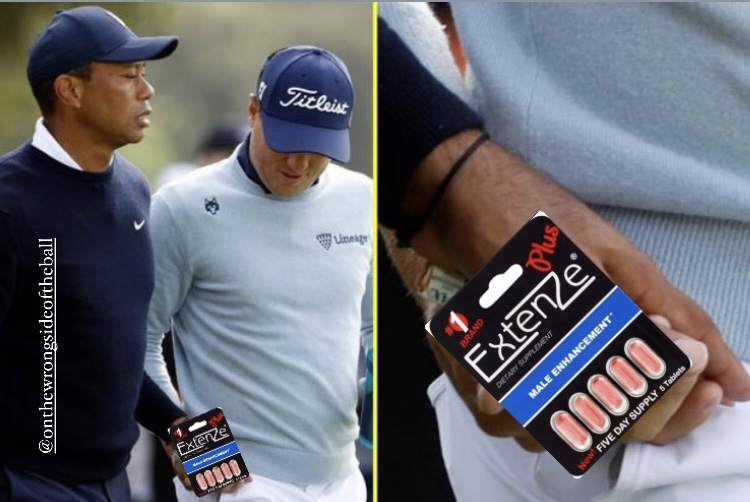
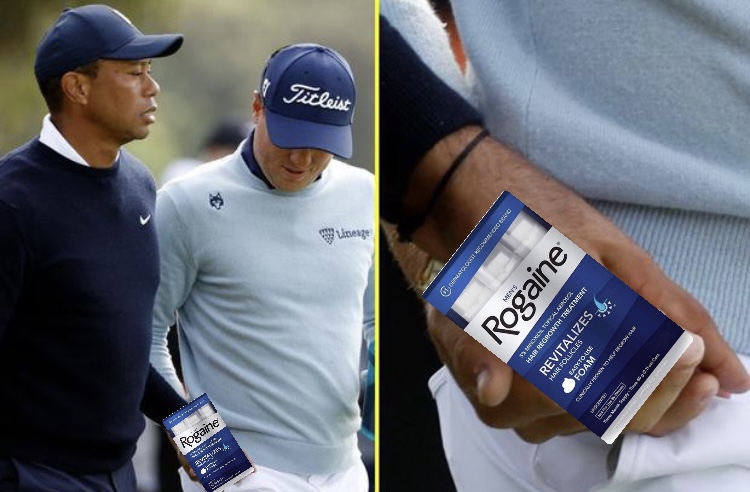
Folks have been postulating about where he may have procured this tampon. By the looks of the ancient packaging, it’s obviously a cardboard tampon, a style no sane woman would ever willingly purchase save in an emergency. I would venture to say he snagged it out of the women’s locker room at The Riviera; where else would you be able to find such an outdated style tampon other than an underused women’s locker room at a musty old private golf club that never wanted women there in the first place?
«Grow the game», they say, as they call the forward tees «ladies tees». «Grow the game», they say, as they call each other pussies for laying up. «Grow the game», they say, as they prohibit women from playing on their course at specific times. «Grow the game», they say, as they like and share another sexist meme from a golf «humor» page. «Grow the game», they say, as they support scantily clad golf «models» instead of professional female golfers. «Grow the game», they say, as they define the acronym of GOLF as «Gentlemen Only Ladies Forbidden». «Grow the game», they say, but they refuse to support equal pay for female professional tours. How can we truly grow the game when sexism and hatred towards women is so pervasive, I would even dare to say inherent, in golf? How can we truly grow the game when the game’s biggest icon and poster boy participates in, validates, and is unapologetic about his casual sexism?
You cannot have both; you cannot say you want to «grow the game» while continuing to foster a toxic, putrid culture for women both on the course and virtually in golf media and social media. You cannot have both; you cannot ogle and jerk off to women in short golf skirts while also using those same bodies as vehicles for insult, scorn, and disdain. You cannot say you support women in golf if you equate our very existence with fragility and failure. You cannot promote «international women’s golf day» and simultaneously use women and their bodies as insults on the golf course. Women are only seen as customers in the golf world, people to consume and purchase but not participate. Companies sell us needless junk and Lily Pullitzer-tablecloth-looking garb while promoting new technology to men.
Weak men are too embarrassed to be seen using «women’s» golf clubs, even though at their age and skill level, they should really be using an L flex shaft. Weak men are too bashful to move up a tee box despite struggling to get off the tee and holding up groups behind them. Weak men create, laugh at, and disseminate golf humor rooted in sexism, i.e. PGA Memes, Barstool, scum of that nature. I have a theory that these men do not want to include women at all, hence they try to dissuade us by perpetuating sexist stereotypes and preserving the «boy’s club». Well, I’m here to tell you that we’re not going anywhere, no matter what you do, what you say, or how you try to degrade and condescend us. Unless we can eradicate golf media and culture of this vitriol towards women both in public and behind closed doors, the game will never truly be welcoming to all.
This is a call to action to all professional and amateur male golfers to be better; dare to call out casual sexist comments when you hear them & choose insults that do not degrade others based on gender. Even simply by not engendering the tee boxes, you are making a statement of support. Not all of us have the reach or influence that Tiger does, but we can all do small acts to change the way we speak about and treat women in golf. This is also a call to Tiger to look inward and ask yourself why you, as a near geriatric, thought this stunt would be funny and how you thought this would inspire more young girls to pick up a golf club.
-
Originally published May 24, 2021 via D&F Modern
The LPGA tour is comprised of the most elite golfers on the planet and LPGA tournaments are some of the most exhilarating sporting events to watch. They strike the ball with precision, power, and finesse. Their membership is robustly diverse with 125 international members representing 32 countries, plus the organization hosts prestigious global tournaments in Asia & Europe. For 71 years, the LPGA has been investing in young women and female golf professionals by creating scholarship funds to support youth and accessibility golf initiatives. The LPGA has a profound mission to make golf more diverse and inclusive for all.
Despite all of this promising work to grow the game, professional women’s golf does not receive an inkling of the attention, funding, or sponsorship opportunities as men’s professional golf. With a lack of live cable broadcasts, LPGA tournaments are typically reduced to app streams, or if they are broadcast on cable it is on tape delay well after the winner has been announced. What will it take for women’s golf to become the main event?
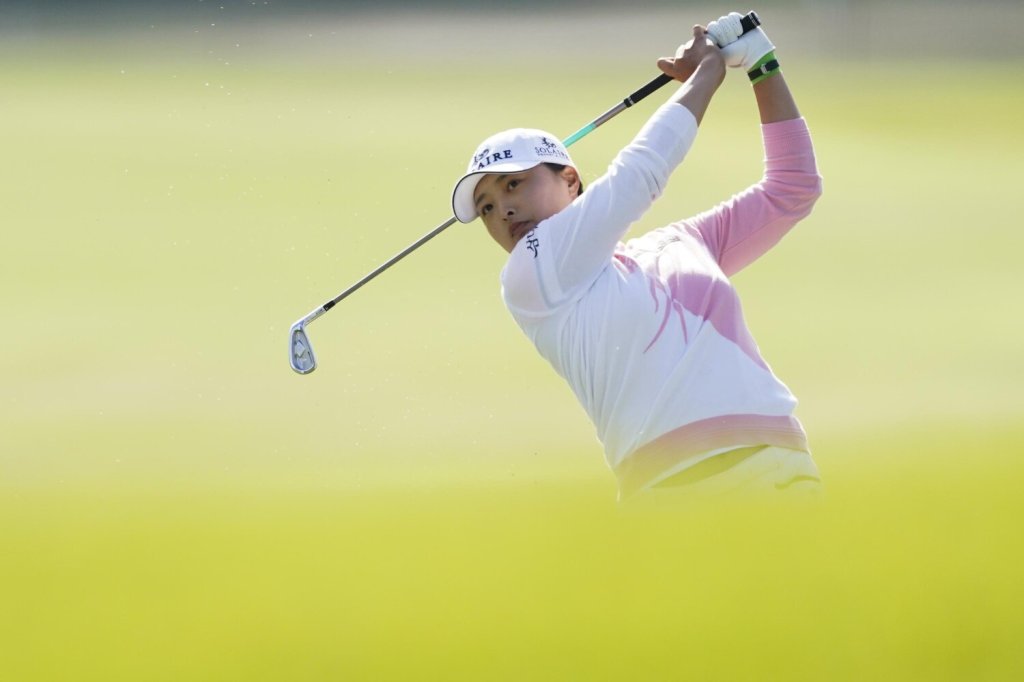
Jin Young Ko Beth Ann Nichols, one of the few female golf writers, postulated in a March 16, 2021 article for Golf Week Magazine that course set up for LPGA tournaments is the predominant factor hindering professional women’s golf viewership. Nichols advocates for the LPGA to play shorter courses, with a recommended tournament course length closer to 6,000 yards (the equivalent of playing slightly closer than the blue tees) to lead to more scoring opportunities and in turn, more viewers for LPGA tournaments. Nichols proposes that the act of moving up select tee boxes would drive viewership for the LPGA, and lack of driveable par 4’s is a drawback for viewers. Bryson DeChambeau does not hit the green on a par 4 because the PGA shortened the courses, he does so because there is a specific science to his practice & has been working hard/bulking up for years. Bryson has the most successful ratio of attempts at driving greens on par 4 because he gains far more shots than he loses. He has the best Return to Player (RTP) and it is proof the risk pays off for him when he employs this strategy.
Nichols argument for shortening the courses is that «there is no more cost-effective way for the LPGA to immediately increase the entertainment value of its tour than to set up more courses that are conducive to low scoring.» The Lotte Championship in Kapolei, HI, which was played about a month after Nichols article was released, moved three tee boxes forward, including #7, a par 5, that was moved up 65 yards. That’s a significant amount. This is a course where players typically card scores of -20 and below. In my opinion, if the LPGA’s strategy for increased viewership is moving tees forward to increase scoring opportunities, this should be reserved for courses where scores are generally higher and players frequently struggle.
One of my issues with this article is that viewers need not be enticed to watch women’s golf; there is already a strong demand across a diverse mix of demographics to watch live cable broadcasts of LPGA tournaments. Despite this, at the end of February 2021, there were three (3) men’s tournaments broadcast live on network cable: PGA Tour WGC Workday, Champions Tour Cologuard, & Puerto Rico Open. Meanwhile, the LPGA Gainbridge at Lake Nona Country Club was reduced to tape delay & app streams, a slap in the face to fans who wanted to watch and a detrimental blow to young female golfers everywhere. Take a look at the strides being made in the WNBA and NWSL, imagine what equal programming for LPGA would do for the growth of the game amongst young girls. There is also demand from beginner and senior citizen demographics to watch golf that is more realistic. For example, a majority of amateur golfers find watching LPGA tournaments to be more relatable because, while they still cannot hit it as far or as perfectly as the ladies, it is a more verisimilitudinous and achievable depiction of a round than the PGA tour, whose players bomb it 350+ off the tee leaving a measly wedge shot and a putt. Alison Whitaker, former player on the Ladies European tour, hypothesized on the Filthy Lipout podcast, “It’s a different game. The women are still playing the courses as they were designed to be played, which I actually really like, whereas the guys are overpowering them. I’m kind of caught in between because I’d love to have a real appreciation for how good those players are in the women’s game, but I don’t know that I’m ready to sacrifice course design for it.”

Mina Harigae and caddy/fiancée, Travis Kreiter Travis Kreiter, professional LPGA tour caddy for his fiancée, Mina Harigae, shared his perspective on the matter with me and it helped me consider the other side of the argument, “All of these players who you listed, along with my fiancé whom I caddy for would play shorter tees if given the opportunity. The goal is to make as many birdies as possible and shoot the lowest score possible.” Professional LPGA golfers are on board with the proposal because this is their career, this is a competition, there is money on the line and any chance to win and make more money will be taken. This led me to the conclusion that when a career and annual earnings are on the line, perhaps taking advantage of an easier course set up would be wise. On the flip side, as Travis puts it, “Women who don’t play professionally should challenge themselves to make as many birdies and pars as possible from whatever tees are comfortable. The goal is not to struggle, it’s to have fun and play your best.”
There is also the perspective of shorter hitters on the LPGA tour. I spoke with Ben Harpring of WomensGolf.com about how the goal of moving tees closer should not be for entertainment, but rather to give shorter hitters and folks we don’t typically see in the top 10 or top 20 more opportunities to go low. “The scores across tournaments over the years show that they can play incredible golf anywhere. But the big thing is that it’s misleading, in my opinion; the winning scores can be very low, even the top-5 finishers, but then there is typically a massive drop off. Creating a couple more scoring opportunities for the 85% or more of the field that cannot reach most of the par 5’s in two is the basic ask I believe. Just move a couple of par 5’s up to make them reachable for everyone, and not just 5-10 players.”
While I disagree with the motivation for Nichols’ stance, there is some validity to increasing scoring opportunities from a player/caddy perspective. But, changing the course layout isn’t the only solution, we should be focusing efforts on narrowing the pay gap between female and male golfers, increasing live broadcast accessibility of professional women’s golf, as well as encouraging larger name sponsors to invest in women’s golf tournaments & female golfers, as is happening at the upcoming ISPS Handa World Invitational event. Suggesting players move up a tee is a distraction from real issues plaguing both professional and recreational women’s golf.
Why is the LPGA curiously taking Nichols’ reform to heart? Who would stand to gain what if this practice continues? Do we not have faith in golf fans to watch female professional golf tournaments without scores in the low 60’s and below every tournament? Will they put an asterisk next to uber low scores (a la Roger Maris’ homerun record) for those achieved at courses where multiple tee boxes were moved a significant distance forward? Professional female golf has many obstacles, but the course is the one aspect of golf that does not discriminate.

In tweets following the article, Nichols asserted that even average female players should not feel shame from hitting from the forward tees despite being above average players . I disagree even more firmly.

I say that is a ludicrous perspective. Tee positions are genderless, rather they are based on skill level. Women should not feel limited to the forward tees, nor should men be afraid to tee it forward. Plenty of men play course lengths that are too long for their skill levels and plenty of women play course lengths that are too short for their skill levels – why is this? Could it be that mainstream golf media is perpetuating these stereotypes?
When I first started learning golf two years ago, I said from day one that I would not remain at the forward tees forever and I couldn’t understand why so many women don’t challenge themselves/are not encouraged to move back tees as they progress. Most courses don’t even have par calculations for females for tees further back than gold or white, however there are plenty of ladies playing consistently well from the tips. The course design is the great equalizer of golf, however Nichols’ article tries to villainize it.
Jamie O’Neill, a professional women’s long drive competitor, said her course does not even provide par calculations for women playing anything further back than the two forwardmost tees. “Generally, I play from the tips. The length and handicap makes it appropriate for me. Playing in ladies league/red tees is slow, since I have to wait on every par 4 for the green to clear. I’ve had to request tees to be added to the handicap systems since they only have reds.” How can female golfers feel welcome on the golf course when they can’t easily post their scores from the tee’s they are playing while men can typically post from all tee boxes? Beginner male players are encouraged and even expected to successively move back tees as they progress, so where is this same fervor for female players? Women should be given the same opportunities as men on the golf course to play the game that best suits their ability.
Henry Stetina, Director of Instruction at Red Hawk Golf Club in Las Cruces, NM, as well as program coordinator for the New Mexico State University Professional Golf Management Program, says all players should start out learning from a shorter course and work their way backwards. “I like the Operation 36 model of teaching players (regardless of skill, age, or gender) to score par from 25 yards out and then progress to longer courses while achieving par from each distance.” As for elite professionals, they most definitely can handle current course lengths (6,200+ yards) – are you going to be the one to tell Lexi Thompson, Anne Van Damm, Patty Tavatanakit or Sophia Popov to move up a tee? I think not. I don’t want to live in a world where women are limited to the forward tees and not given the opportunity to show their strength. I challenge you to play golf that is enjoyable but also maintains the appropriate level of challenge. Challenging your game will give you a deeper sense of connection and relevancy to the women competing on the LPGA. But this notion will not be widely accepted, if PGA Club Professionals do not do their part to make golf courses more welcoming to everyone by using more inclusive language when referring to tee boxes. It’s time for signage that classifies tees to be based on skill level/distance not on gender.

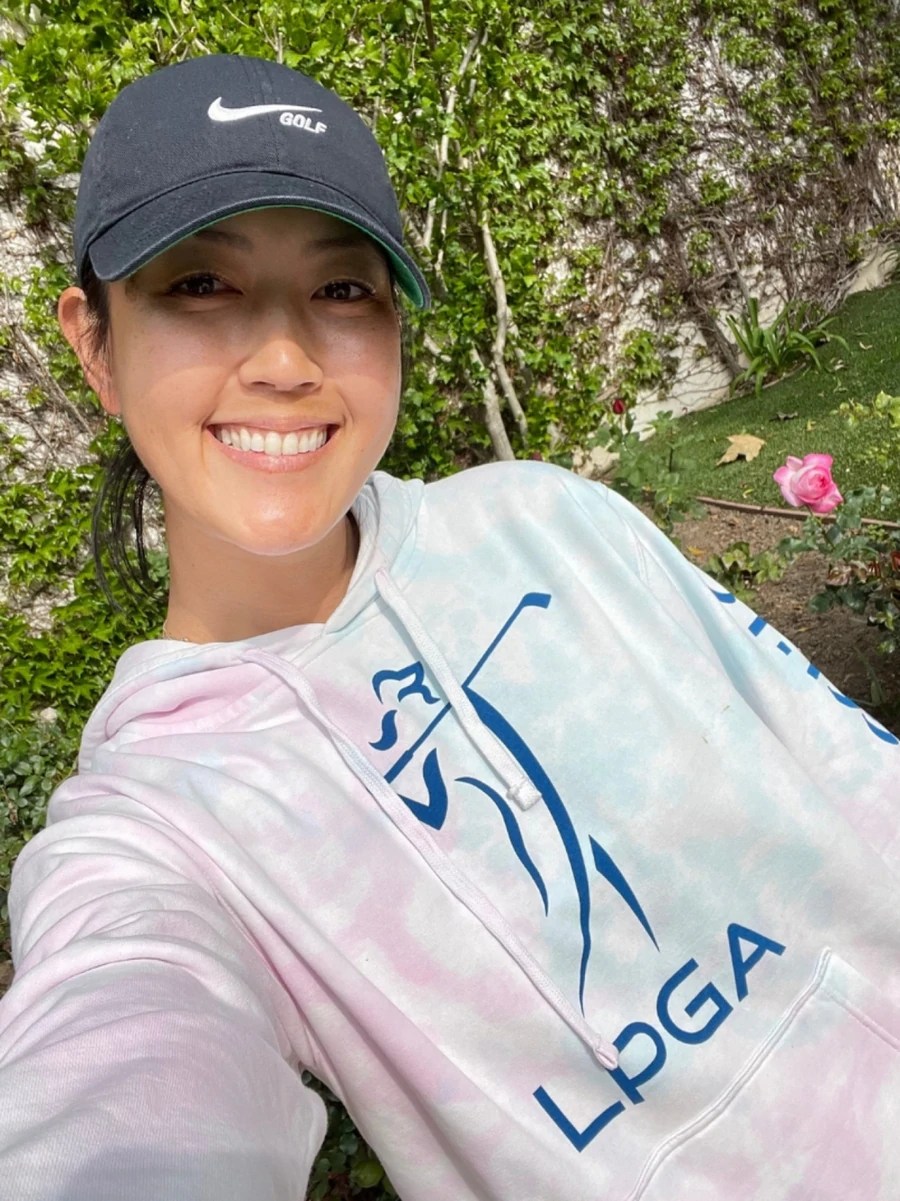
Michelle Wie West and the «hoodie for golf». As of October 2021, more than 13,000 hoodies were sold, over $300,000 raised for the LPGA Renee Powell Fund and Clearview Legacy Foundation. So what really needs to happen to drive change? After over two months of research and conversing with golfers from different backgrounds and varying perspectives, I came to the conclusion that occasionally I could be on board with moving tees closer, not for entertainment purposes or to bait viewers, but firstly to diversify the assortment of players at the top of the leaderboard, and secondly to give those folks (and their caddies) a better chance at winning tournaments. Additionally, why not add shot tracer to LPGA tournaments as my friend Tanner Gibas, media specialist for Denver City Golf Works suggests. The PGA and European tour have shot tracer every tournament, why don’t the ladies? Lastly, and maybe most importantly, we need continued support from mainstream sports media and men’s organizations to help promote LPGA tournaments and players. The hoodie for golf campaign is an amazing start, but I would like to see more athletes and influencers reposting shot highlights from LPGA tournaments and collaborating with players, just two examples of how LPGA can prove to new audiences that women are worth watching. All in all, it is time for women to be promoted as the main event and treated in the same manner as men, based on skill level and not gender.
-
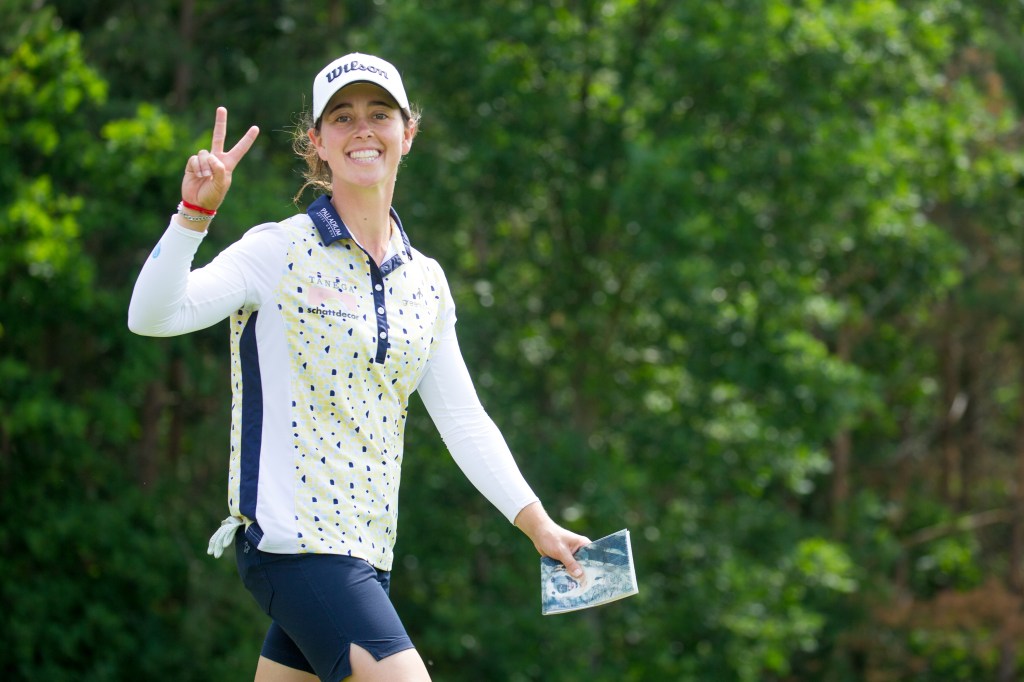
27/06/2021. Ladies European Tour 2021. Tipsport Czech Ladies Open, Golf Club Beroun, Beroun. Czechia. June 25-27 2021. Nuria Iturrioz Servera of Spain during the final round. Credit: Tristan Jones.
Scroll down to read the English translation.
Cuando la vida es difícil, ¿cómo puede sonreír? A veces una sonrisa es una manera de lidiar con ansiedad o emociones difíciles. Por otro lado, sonreír le ayuda a simplificar y agradecer la vida. La mayoría de jugadores de golf no revelan sus emociones, quizás forma parte de su estrategia. Sin embargo, existe una golfista española más conocida por su sonrisa magnífica y su actitud positiva a pesar de cualquier que sucede. Ella se llama Nuria Iturrioz Servera y es miembra de la gira europea. Nuria es nativa de Palma de Mallorca, España y la belleza de este lugar se refleja en su personalidad y energía. Su perspectiva y manera de abordar a ciertas circunstancias a mí me fascinan. Tener una buena mentalidad y el poder volverse de buen humor durante un torneo es una aventaja y una habilidad integral de los mejores golfistas. Ella pasó por algunos desáfios muy temprano en su carrera profesional y ellos ayudan a ella desarollar una mentalidad que es muy comprensiva y también juguetona. Le envié un mensaje a Nuria casí caído del cielo durante un momento de angustia mental propio en 2021 y me asombré de que ella me contestó. Inmediatamente me di cuenta de que Nuria verdaderamente es una persona extraordinaria con una filosofía de la vida muy hermosa incluso práctica.
Al principio, le pregunté, “Cuando la vida es difícil, ¿cómo puede sonreír?”. Nuria me contestó en una manera hermosa y auténtica,
“Tratar de ver lo positivo en todo. Mantenerse en equilibrio, ni lo bueno es tan bueno y ni lo malo es tan malo. Todo llega, todo pasa y todo cambia. No te compares con nadie y agradece mucho. Hay que disfrutar de todo.”
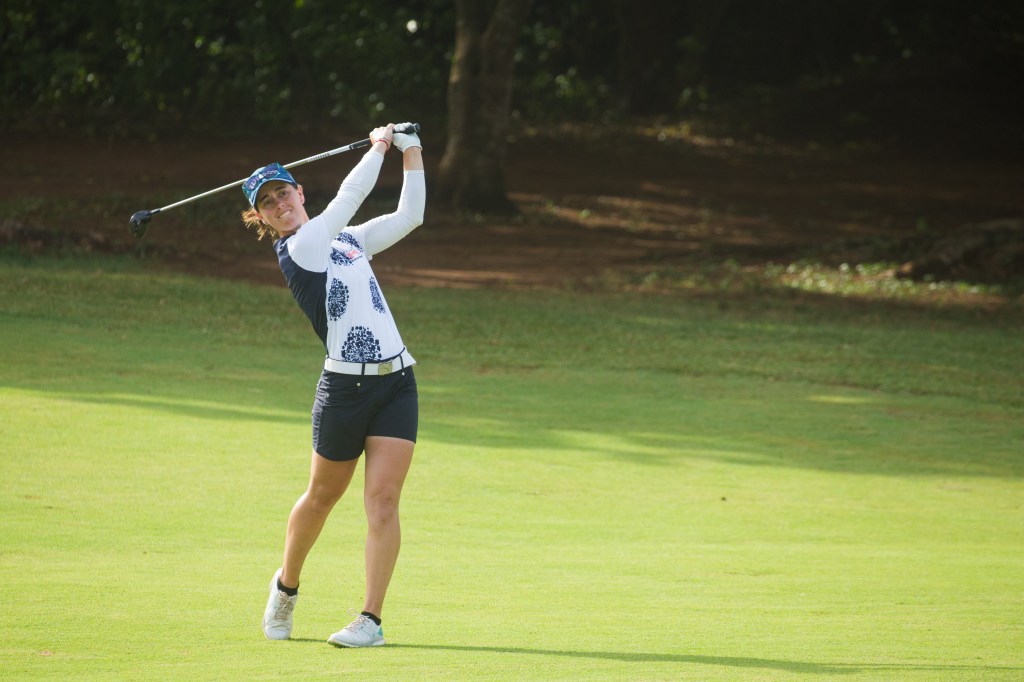
12/02/2022. Ladies European Tour 2022. Magical Kenya Ladies Open, Vipingo Ridge PGA Baobab Course, Vipingo Ridge Mombassa, Kenya. February 10-13 2022. Nuria Iturrioz of Spain during the third round. Credit: Tristan Jones/LET
Creo que era filósofa en la vida previa. Sus palabras y sus consejos son claves y muy útiles. A veces lo más simple es el camino más exitoso. No creo que sonría desde un sentimiento de ansiedad, pienso que sea auténtico. La cosa rara y extraordinaria sobre La Nuria es que sonríe al bueno y al malo. Ella explica su filosofía del equilibrio con relación al golf y a la vida.
“La verdad es que vengo de una familia muy sonriente, pero también cabezones. Es decir, si queremos algo, vamos a por ello, y eso crea ansiedad, frustración y enfado. Pero sonreír se me hace fácil. Agradezco cómo estoy, dónde estoy y todo lo que me sucede y todo lo que tengo. Va a haber buenos momentos pero también los habrá de malos, y simplemente hay que fluir con eso. ¡Siempre hay días malos!”

12/02/2022. Ladies European Tour 2022. Magical Kenya Ladies Open, Vipingo Ridge PGA Baobab Course, Vipingo Ridge Mombassa, Kenya. February 10-13 2022. Nuria Iturrios of Spain during the third round. Credit: Tristan Jones/LET
No sea posible evitar lo malo de la vida, sino es cómo reaccionar que define esos momentos. A pesar de ser una optimista, ella también es una realista. Eso es fundamental, porque mantenerse en equilibrio parece como la mentalidad más práctica. Ella sabe que no puede evitar lo malo. Permanecerse en un modo de pensar que anticipa solamente momentos malos es una mentalidad negativa. Por otra parte, anticipa solamente momentos positivos y exitosos es evitar la realidad. Hay que preparase para aceptar los dos resultados. Gracias a Nuria por compartir su mentalidad y perspectiva, creo que tendrá mucho éxito. ¡Mucha suerte este año!
ENGLISH TRANSLATION:
Mentality of Balance: Philosophy of Nuria Iturrioz Servera
When life is difficult, how can you smile? Sometimes a smile is a way to cope with anxiety or difficult emotions. On the other hand, smiling helps you simplify and appreciate life. The majority of golfers do not reveal their emotions, perhaps this is part of their strategy. However, there is a Spanish golfer mostly known for her magnificent smile and positive attitude no matter what happens. Her name is Nuria Iturrioz Servera and is a member of the Ladies European Tour. Nuria is a native ofPalma de Mallorca, one of the island territories off the southern coast of Spain, and the beauty of her home town is reflected in her personality and energy. Having a good mentality and the power to reestablish a good mood for yourself during a tournament is an advantage and a requisite for the best professional golfers. Nuria experienced some struggles early on in her career and these helped to shape her unique mindset that is accepting but also makes the best of whatever situation she is in. Her perspective and way of approaching certain circumstances fascinates me, so much so that I sent her a message out of the blue during a moment of mental anguish several months ago. I was surprised and taken aback when Nuria actually answered my message. Immediately I knew that Nuria truly is an extraordinary person with a beautiful, yet practical philosophy on life.
At first, I asked her, “When life is difficult, how can you smile?” Nuria answered in a beautifully authentic way,
“Try to see the positive in everything. Maintain a good balance for yourself , nothing good is too good nor the bad too bad. Things come, things go, things change. Don’t compare yourself with anyone & be thankful often. You have to take joy from everything.”
I think she was a philosopher in a previous life. Her words and her advice are essential and extremely useful. Sometimes the simplest way of looking at a situation is the most effective. I do not think she smiles from a place of anxiety, her smile is authentic. What is rare and extraordinary about Nuria is that she smiles during the good and the bad. She explains her philosophy of balance with relation to golf and life.
“The truth is that I come from a very smiley family that is also very stubborn. It is said that if we want something and go after it, this creates anxiety, frustration, and anger. But smiling makes it easier for me. I am grateful for how I feel, where I am, everything that has happened to me, and everything that I have. There will be good moments, but there will also be bad ones, and you simply have to flow with it. There will always be bad days!”
It is not possible to avoid the bad in life, rather, it is how you react that defines these moments. Despite being an optimist, Nuria is also a realist. This is fundamental because maintaining a balance seems like the most practical mentality. Nuria knows she cannot avoid the bad. To remain in a thought pattern that only anticipates bad moments is a negative mentality. On the other hand anticipating only positive and successful moments is avoiding reality. You have to prepare yourself to accept both outcomes. Many thanks to Nuria for sharing her mentality and perspective, I believe this will bring you much success. Good luck this year!
-

How one firefighter is spreading the good word about golf to fellow comrades
“The paradox of trauma is that it has both the power to destroy and the power to transform & resurrect.”
Peter A. Levine, PhD, Developer of Somatic Experiencing®
Experiencing one trauma can change the trajectory of your entire life. First responders experience unthinkable traumas repeatedly, day after day. This compounded trauma has serious negative effects on the nervous system and brain. Saving lives as a first responder comes with a heavy price; we often don’t consider how our tragedies affect the folks who are there to protect and save us. But how can these first responders cope with this stress in a healthy manner? One theory: golf. I chatted with firefighter and avid golfer, Steve Pope, about his mission and foundation to bring golf to first responders living with Post-Traumatic Stress (PTS) in Kansas City, KS & beyond.
“Golf is a very humbling sport; I love it for the constant grind to get better. Trying to get better at the game helps me focus on something other than the stresses of my life and profession. Golf was a big part of my life on my days off from the fire department and I came to realize how much it helps me to decompress from the stresses.”
Steve PopeSteve is an incredible human being who alchemized his own pain into a massive healing endeavor that uses golf as a vehicle for first responders to heal from occupational trauma. He is a living embodiment of transforming pain into a positive venture that benefits many individuals. Not only did he found a charitable organization, The First Responders Golf Foundation, to provide golf clinics, golf outings, & tournaments for first responders, he also offers support to fellow comrades who are struggling. His YouTube channel, Firefighter Golf, and Instagram pages (@firefighter_golf) serve as a support network for first responders with PTS, as well as bring awareness to the unfortunate prevalence of first responder suicide. Through the First Responder Golf Foundation tournaments, he will raise money for War Horses for Veterans, his fire department’s peer support program, as well as SWEL Mission, an organization that funds surf retreats for first responders and military. The First Responders Golf Foundation came to fruition with the help of local Kansas City Country Club golf professional, Andy Fisher, who was a driving force in helping Steve brainstorm ideas for his organization. Andy and Steve are planning monthly golf outings at Dub’s Dread Golf Club in Kansas City, KS to fundraise for his larger scale annual tournament.
Their ultimate goal would be to expand this benevolent operation to municipal courses throughout Kansas City and eventually nationally, increasing the accessibility of these outings to first responders far and wide. Steve would also like to bring awareness to firefighter occupational cancer, since firefighters experience chronic and sometimes terminal health issues as a direct result of carcinogens they come into contact with fighting fires. The First Responder Golf Foundation had their inaugural tournament on August 9, 2021 at Dub’s Dread Golf Club and it was a smashing success. With a full field of 36 teams and 144 players, the tournament raised $27,000 through the tournament & raffles after expenses. The foundation also donated $1,000 to like-minded organizations.


Some characteristics of PTSD are hypervigilance, hyperawareness, and being easily startled, all due to changes in ways the nervous system responds following a trauma. Being on call as a first responder means long shifts at all hours of the night & having to switch at a moment’s notice into full gear rescue mode. A 2016 study published in Noise & Health, “The Acute Physiological Stress Response to an Emergency Alarm and Mobilization During the Day and at Night” (Hall, Sarah J et al., vol. 18,82 (2016): 150-6), examines the precise biological phenomenon of fluctuations in stress hormones when responding to alarms at various hours. Steve provided some empirical commentary on the matter,
“When the bell goes off, studies have shown that Cortisol, a stress hormone, is dumped into our system and this keeps us at high alert longer than the normal person. This physiological stress equals psychological stress in the acute stages or long term load like myself. Twenty-three years of this allostatic load of constant exposure to heat, smoke, injuries, repeated physical work, and sleep deprivation sets the stage for PTS. I think you can see how getting on the golf course helps me decompress and reinvigorate now more than ever.”
Steve Pope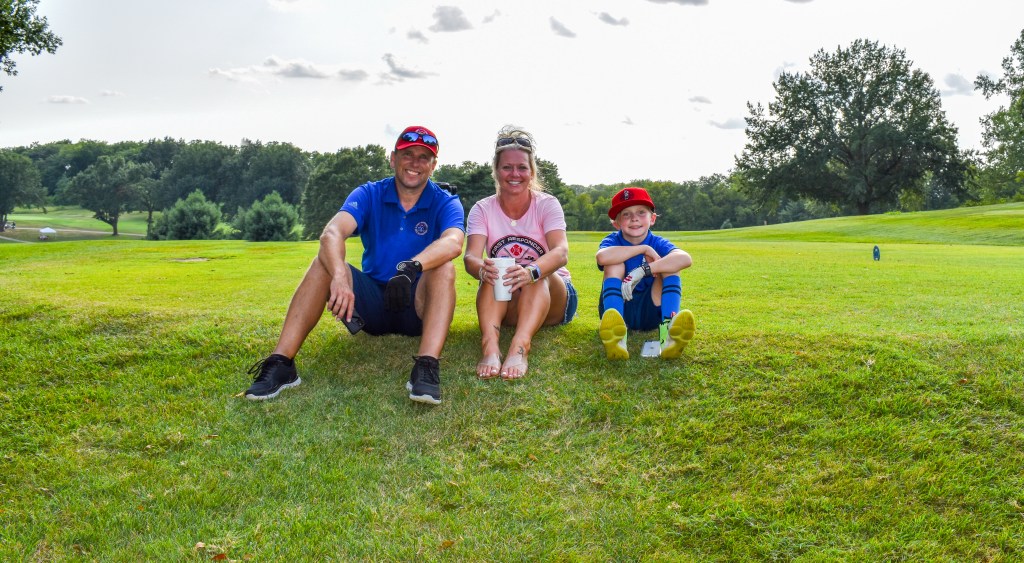
Steve advocates that golf can help first responders handle the intense stress and pressure of these moments, as well as helps them decompress in the aftermath. Golf can help restore and rejuvenate neural pathways damaged by years of constant high-stress situations by promoting a here-and-now, “be in the present moment” approach to tackling tough situations. It also helps train the mind and body to persevere following difficult moments. Golf creates a unique sense of self awareness that can be transmitted to one’s overall self esteem and level of self confidence. Aside from the neurological benefits, golf is fun and being outsides provides plenty of opportunities to notice and appreciate nature, an effective grounding technique. In addition to being instrumental to his own healing journey, Steve has personally witnessed how golf has helped friends and colleagues with their EMS worker-related PTS.
“After a round of golf, I can see it in their eyes. There is a joy that explains it all. That is the best way to describe it.”
Steve Pope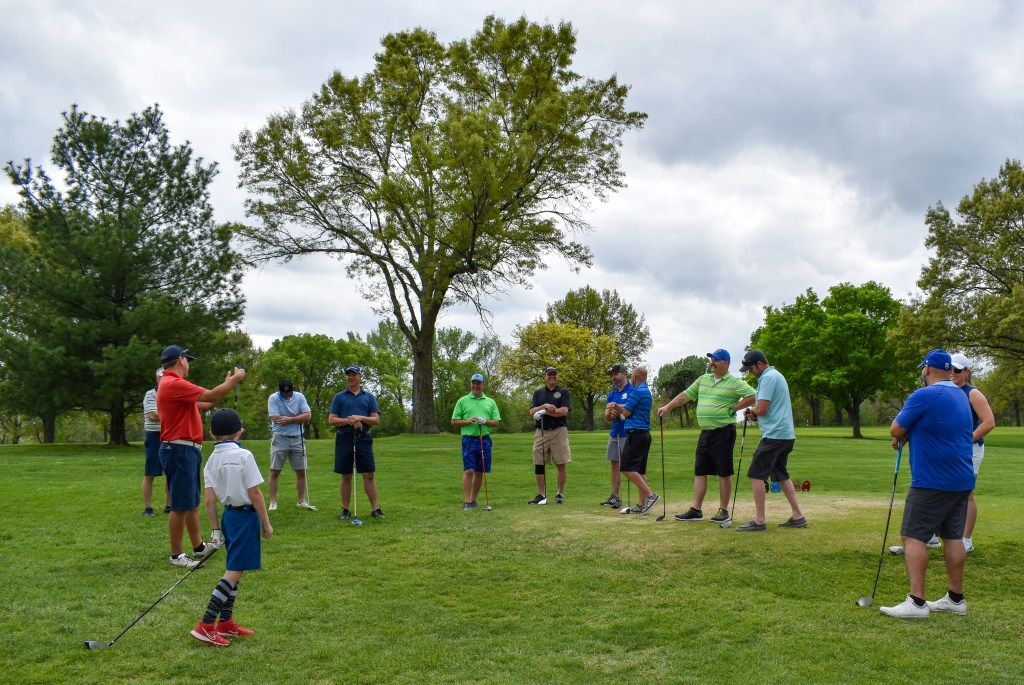
Perhaps the notion of golf as an instrument for emotional healing could be promoted more, such that we forever convert the image of golf from exclusionary country clubs and uppity socialites to something more accessible for all. Rather than it serving as a status symbol, it could serve a purpose in the same vein as yoga, an attainable coping and healing tool for all ages and walks of life. [watch Steve’s video on Mental Toughness] Steve and his foundation will be instrumental in this paradigm shift by way of introducing golf to folks who may never have considered learning and who especially never knew it could help them cope with psychological and emotional challenges. This will be life-altering for innumerable first responders, not only by simply introducing them to this mystical game, but also by promoting camaraderie and partnership within first responder communities. Hopefully these networks can subsequently be a support system and hinder isolation that so many may feel when living with post-traumatic stress.
-
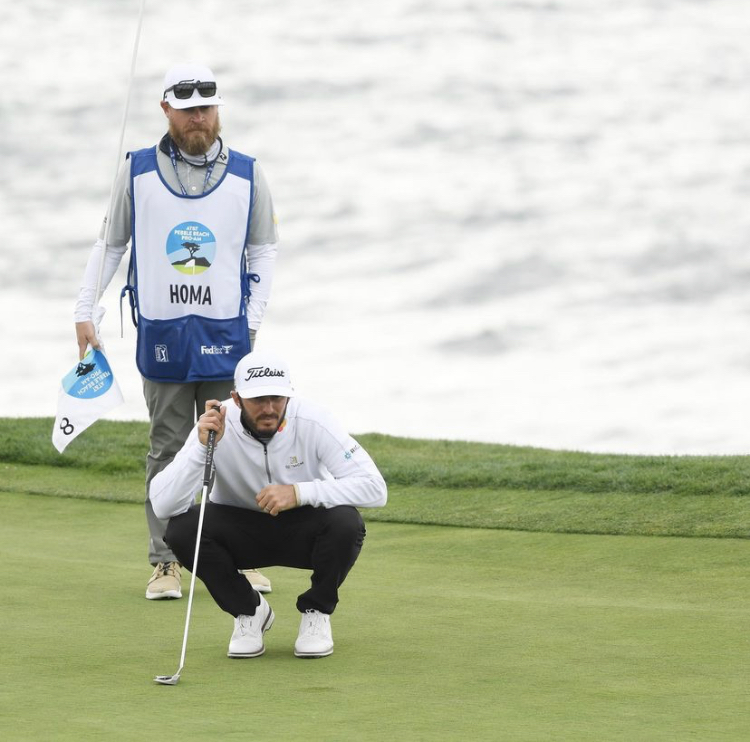
The impact of gratitude, grounding, and forgiveness in Max Homa’s 2021 Riviera win — and why he has his caddy to thank.
written by A. Miller
*This article was originally published by Random Golf Club on Feb. 23, 2021.
“Make friends with your caddy, and the game will make friends with you.” – Stephen Potter
The player-caddy dynamic is a unique feature of golf not found in any other sport. Not merely a transporter of the bag, nor just a savant of each course, caddies serve a versatile role. Are they assistants or playing partners?
Particularly at the professional level, caddies offer far more than just a helping hand and an “Attaboy!” The good ones study the physical quirks and limitations of their player. Better ones will study the tools they need to keep in the bag to assist with any mental limitations. But what does this four-hour, 18-hole discussion look like, especially with a crowded leaderboard on Sunday? Are caddies blind loyalists? Proverbial “yes” men? Or are they realists who carefully craft criticism to cultivate their player’s confidence? To find out, we need look no further than one of the most jovial (and recently successful) duos on tour: Max Homa and his caddy Joe Greiner.
Fresh off Max’s T-34 finish at the Waste Management Phoenix Open & a T-7 finish at Pebble Pebble, weeks of the anticipation culminated with a gutsy hometown win for Homa at Riviera this past Sunday. But his Genesis Invitational victory was not without challenges. Nothing really worth it ever is, though.
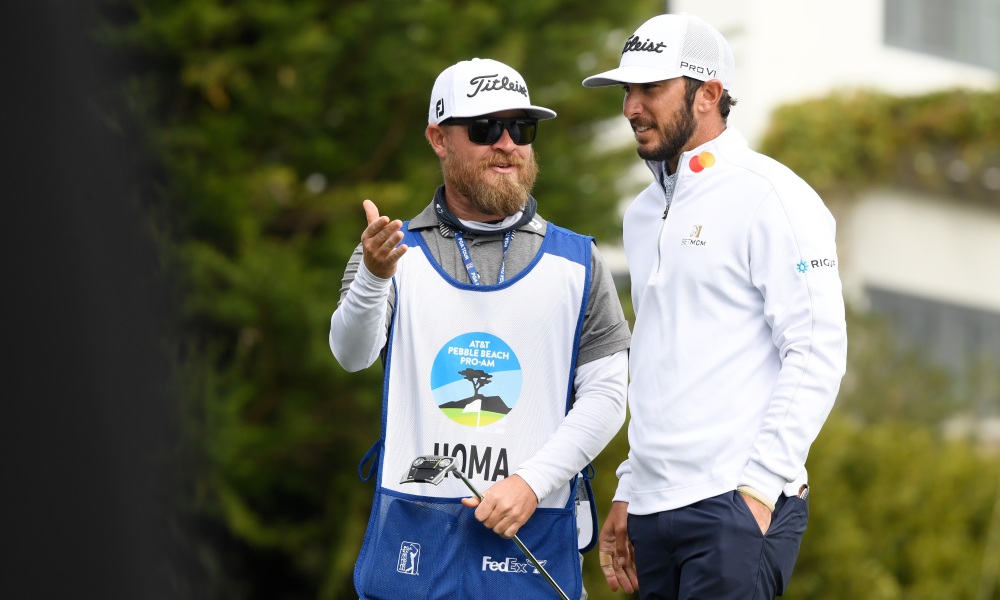
Joe Greiner and Max Homa at Pebble Beach Pro Am in 2021.
(Credits: Harry How / Getty Images + The Country Club Collection)We spoke to Max about his whirlwind experience and to understand a little more about his perspective. His weekend round saw a ton of notable shots. Saturday, it was a greenside bunker shot that slammed the brakes on the slippery 10th green. Sunday, there was a crisp iron shot threaded narrowly through the trees on the par-5 11th, followed by another sly bunker shot to tie Tony Finau for the lead on the 71st hole. How did he pull off such well-executed shots in the exact moment needed?
“You just have to speak things into existence. Like, ‘I’m going to hit this shot well.’ or ‘I’m going to make this putt.’”
And sometimes that positive self-talk is vital not because you make the putt — but because you’ve just missed one. On the 18th hole on Sunday, right after his birdie to tie the lead, Homa stuck it to three feet and had only a short birdie putt to win the tournament. And that’s when the most important moment of the day happened: he missed.
Well, the most important moment of the day happened next: Homa tapped in his par and closed out with a bogey-free, 5-under 66 in the final round. There were no blemishes on the scorecard, but this par felt like a gut-punch. And caddy Joe Greiner was right there with a firm slap on the shoulder and some immediately encouraging words. Because there was still more golf to be played.
How do you pick your player up after missing an easy putt for the outright win? If positivity is so reliable, imagine the dangers of self-deprecation — something many amateur golfers are familiar with — and the power it takes to steer your player clear of that negativity.
The history between Greiner and Homa is rich: they have been working together in a professional capacity since 2013, and they’ve been best friends since they were 6.
“Joe is probably the most important person to me. I am really fortunate to have him.»
One admirable aspect of their relationship is their mutual respect and gratitude for one another. Another is Joe’s unrelenting support for his buddy — he’s not just trying to earn a paycheck, he really wants to see his friend succeed. When Max hits a juicy shot, Joe is the first voice you can hear on the mics to praise him. And when a shot goes awry or an easy putt lips out, Joe is there to keep Max in the right frame of mind.

Joe (L) with Mark Blackburn (C) and Max Homa (R) at the
Northern Trust Playoff Tournament in 2021 at Liberty NationalAnother piece of their puzzle is the genuine acknowledgment and appreciation Joe feels in return. “Max makes me feel very valuable. He listens to most of my advice,” Joe said in a PGA TOUR Exclusive. “When I tell him things, he really takes it to heart and I appreciate that.”
A caddy is the only person besides the player themselves who has access to and the power to directly influence a player’s headspace.
“Joe is just so mild-mannered. So, if it’s a rollercoaster day, I just feed off his calmness. And he has a knack for saying the right things at the right time.”
One can only assume that being such close friends with your player could lend a hand in recognizing mental triggers and how to combat them.
So how exactly did Max break out of a negative headspace — or avoid the downward spiral altogether — following that missed 3-footer on 18? The answer might be Joe.
“Just by his support and lack of panic, not making me feel down at all just seeming so stoked to go to a playoff.”
In the field of somatic psychotherapy there’s a technique known as co-regulation, where one nervous system soothes another. Essentially, two people use breathing and grounding techniques with or without physical touch to assist in regulating the nervous system. This is especially helpful in stressful moments when we feel most reactive and dysregulated, but have another body nearby to help calm us down.
The rest is history, as they say, and made for phenomenal Sunday television: Max’s drive on the first playoff hole, the tricky 10th at Riviera, wound up inches from a tree. With Tony Finau in the driver’s seat, Max’s luck seemed to be running out. But with smart club selection, some encouragement from Joe, and an incredible hooded swing of a gap-wedge, Homa pitched up onto the green and saved par — and saved his chances at a W.
On the next hole, that mental perseverance paid off. With a simple par, Homa outlasted Finau for his second tour victory. And what words of wisdom did Joe whisper to him after they won?
“Good sh*t, I can’t believe we did it.”
Judging by Homa’s recent triumph and even the way he’s responded to bad shots, it’s clear the two have been honing their harmony for this exact moment.
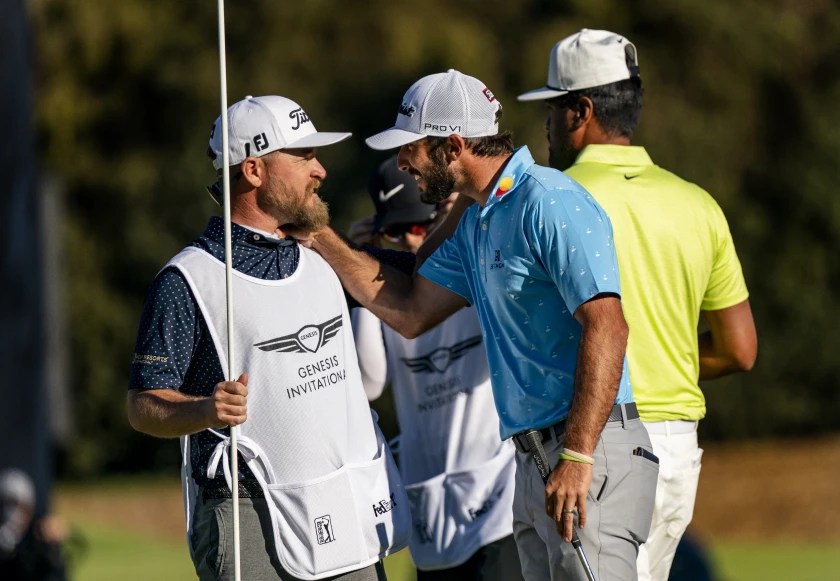
Joe & Max after their win at The Genesis Invitational 2021 at The Riviera Country Club (Credit: Gina Ferrazi / Los Angeles Times) Feeling seen, heard, and even treasured is an integral part of Joe’s professional relationship with Max. It’s an appreciation beyond just carrying someone’s clubs. And that appreciation can transform the player-caddy partnership into a true symbiosis. Gratitude, confidence, and humility seem to be the most effective qualities of the mental approach of successful golfers.
Sunday’s success is proof of the power of positive reinforcement over criticism and shame. As Homa puts it, putting that positive thinking to work just makes him “a happy dude.” And with Joe at his side and a trophy to take home, it looks like it’s paying off.

On the Wrong Side of the Ball
Golf counter culture. New alternative golf editorial website supporting & representing the underground & fringe niches.
 On the Wrong Side of the Ball