

How one firefighter is spreading the good word about golf to fellow comrades
“The paradox of trauma is that it has both the power to destroy and the power to transform & resurrect.”
Peter A. Levine, PhD, Developer of Somatic Experiencing®
Experiencing one trauma can change the trajectory of your entire life. First responders experience unthinkable traumas repeatedly, day after day. This compounded trauma has serious negative effects on the nervous system and brain. Saving lives as a first responder comes with a heavy price; we often don’t consider how our tragedies affect the folks who are there to protect and save us. But how can these first responders cope with this stress in a healthy manner? One theory: golf. I chatted with firefighter and avid golfer, Steve Pope, about his mission and foundation to bring golf to first responders living with Post-Traumatic Stress (PTS) in Kansas City, KS & beyond.
“Golf is a very humbling sport; I love it for the constant grind to get better. Trying to get better at the game helps me focus on something other than the stresses of my life and profession. Golf was a big part of my life on my days off from the fire department and I came to realize how much it helps me to decompress from the stresses.”
Steve Pope
Steve is an incredible human being who alchemized his own pain into a massive healing endeavor that uses golf as a vehicle for first responders to heal from occupational trauma. He is a living embodiment of transforming pain into a positive venture that benefits many individuals. Not only did he found a charitable organization, The First Responders Golf Foundation, to provide golf clinics, golf outings, & tournaments for first responders, he also offers support to fellow comrades who are struggling. His YouTube channel, Firefighter Golf, and Instagram pages (@firefighter_golf) serve as a support network for first responders with PTS, as well as bring awareness to the unfortunate prevalence of first responder suicide. Through the First Responder Golf Foundation tournaments, he will raise money for War Horses for Veterans, his fire department’s peer support program, as well as SWEL Mission, an organization that funds surf retreats for first responders and military. The First Responders Golf Foundation came to fruition with the help of local Kansas City Country Club golf professional, Andy Fisher, who was a driving force in helping Steve brainstorm ideas for his organization. Andy and Steve are planning monthly golf outings at Dub’s Dread Golf Club in Kansas City, KS to fundraise for his larger scale annual tournament.
Their ultimate goal would be to expand this benevolent operation to municipal courses throughout Kansas City and eventually nationally, increasing the accessibility of these outings to first responders far and wide. Steve would also like to bring awareness to firefighter occupational cancer, since firefighters experience chronic and sometimes terminal health issues as a direct result of carcinogens they come into contact with fighting fires. The First Responder Golf Foundation had their inaugural tournament on August 9, 2021 at Dub’s Dread Golf Club and it was a smashing success. With a full field of 36 teams and 144 players, the tournament raised $27,000 through the tournament & raffles after expenses. The foundation also donated $1,000 to like-minded organizations.


Some characteristics of PTSD are hypervigilance, hyperawareness, and being easily startled, all due to changes in ways the nervous system responds following a trauma. Being on call as a first responder means long shifts at all hours of the night & having to switch at a moment’s notice into full gear rescue mode. A 2016 study published in Noise & Health, “The Acute Physiological Stress Response to an Emergency Alarm and Mobilization During the Day and at Night” (Hall, Sarah J et al., vol. 18,82 (2016): 150-6), examines the precise biological phenomenon of fluctuations in stress hormones when responding to alarms at various hours. Steve provided some empirical commentary on the matter,
“When the bell goes off, studies have shown that Cortisol, a stress hormone, is dumped into our system and this keeps us at high alert longer than the normal person. This physiological stress equals psychological stress in the acute stages or long term load like myself. Twenty-three years of this allostatic load of constant exposure to heat, smoke, injuries, repeated physical work, and sleep deprivation sets the stage for PTS. I think you can see how getting on the golf course helps me decompress and reinvigorate now more than ever.”
Steve Pope
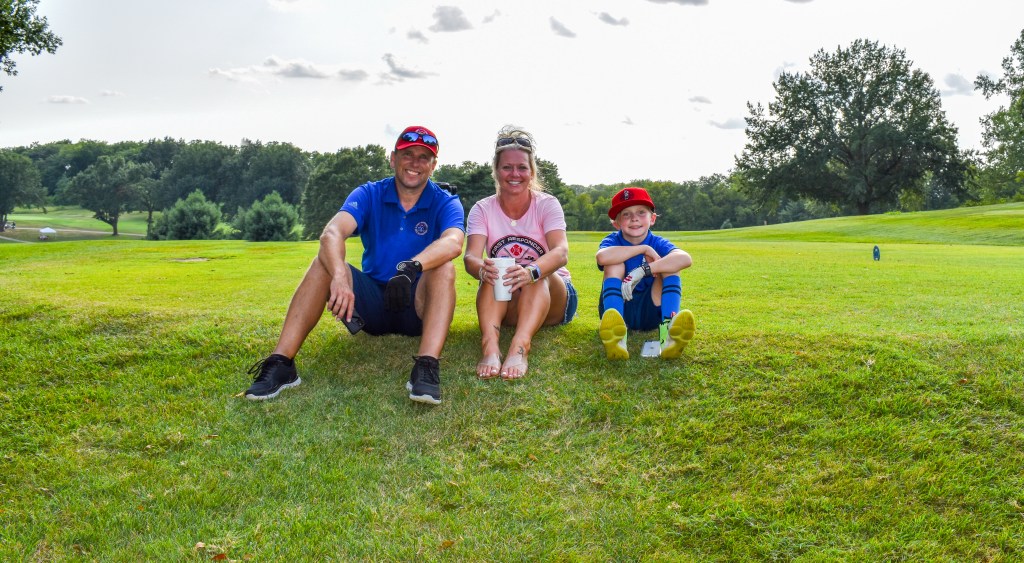
Steve advocates that golf can help first responders handle the intense stress and pressure of these moments, as well as helps them decompress in the aftermath. Golf can help restore and rejuvenate neural pathways damaged by years of constant high-stress situations by promoting a here-and-now, “be in the present moment” approach to tackling tough situations. It also helps train the mind and body to persevere following difficult moments. Golf creates a unique sense of self awareness that can be transmitted to one’s overall self esteem and level of self confidence. Aside from the neurological benefits, golf is fun and being outsides provides plenty of opportunities to notice and appreciate nature, an effective grounding technique. In addition to being instrumental to his own healing journey, Steve has personally witnessed how golf has helped friends and colleagues with their EMS worker-related PTS.
“After a round of golf, I can see it in their eyes. There is a joy that explains it all. That is the best way to describe it.”
Steve Pope
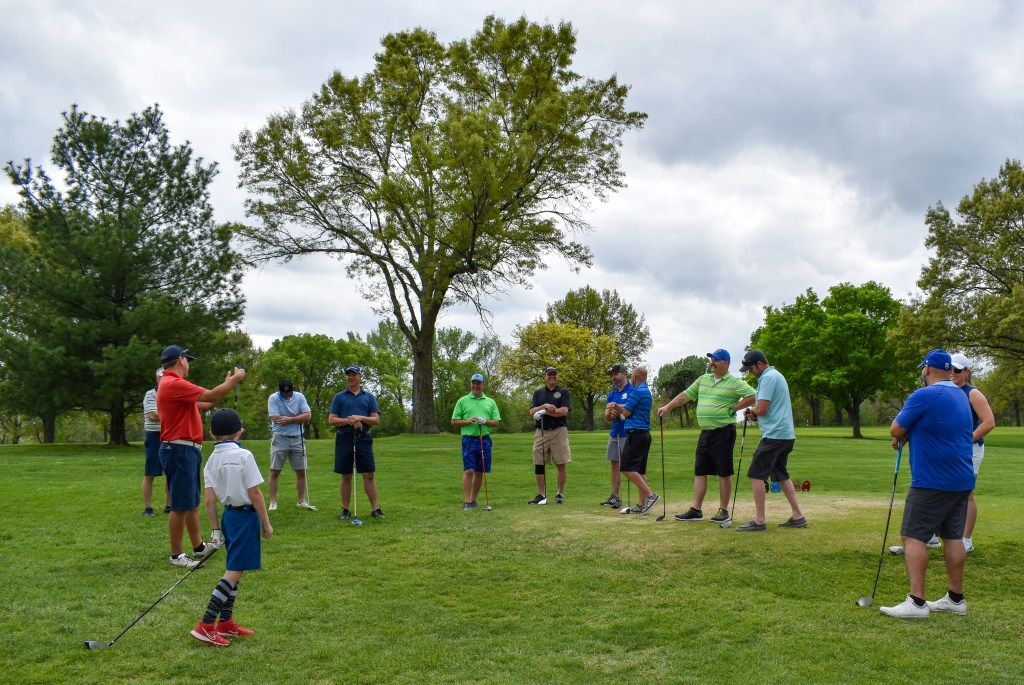
Perhaps the notion of golf as an instrument for emotional healing could be promoted more, such that we forever convert the image of golf from exclusionary country clubs and uppity socialites to something more accessible for all. Rather than it serving as a status symbol, it could serve a purpose in the same vein as yoga, an attainable coping and healing tool for all ages and walks of life. [watch Steve’s video on Mental Toughness] Steve and his foundation will be instrumental in this paradigm shift by way of introducing golf to folks who may never have considered learning and who especially never knew it could help them cope with psychological and emotional challenges. This will be life-altering for innumerable first responders, not only by simply introducing them to this mystical game, but also by promoting camaraderie and partnership within first responder communities. Hopefully these networks can subsequently be a support system and hinder isolation that so many may feel when living with post-traumatic stress.
 On the Wrong Side of the Ball
Deja un comentario